Showing posts with label Bengaluru. Show all posts

Tuesday, July 08, 2008

Ooru Neeru


Ooru neeru event was organized by Bangalore City Project an NGO involved in raising awareness about the cultural infrastructure of Bangalore. This was the 4th such event organized by BCP. I didn’t know of the first two and I was late for the 3rd one (they accept limited number of participants for each event).

Ooru neeru event was also coordinated by Rainwater Club, an NGO working on water conservation. It was a guided tour of India’s first piped drinking water supply project. The main locations that we visited were Hessargatta lake, Turubanahalli and Soldevanahalli. Ooru neeru translates to city water.

Arkavathy River
Hessargatta Lake is one of the 178-180 lakes feed by the Arkavathi River. The river has its origins in the Nandi Hills range and eventually joins the Cauvery River. Until a few years back it used to flow for more than nine months in an year, filling up all the lakes on it path. The other prominent lake that also happens to be in its path is the Thipegondanhalli lake (T.G.Halli). Arkavathi River is now completely dried up.

Hessargatta Lake
Hessargatta Lake is a man made lake built in the year 1532. It was latter expanded in 1894 to supply water to Bangalore city. Two villages (one of them Hessargatta Village itself) was moved to a different location for expanding this lake – the remains of which can now be found in the lake bed. Hessargatta Lake along with two other small lakes Byatha Lake and Kakola Lake has a total water storage capacity of 1.1 TMC of water. The lake is around 4000 acers and surrounded by state and central government agencies – the main reason to have survived the land sharks. Unfortunately except for the water in a small 1000 sqft pond on the lake bed, there is not a single drop of water. This lake was completely filled for the last time in 1988 and it has been almost dry from 1994. Some of the older generation people who were there talked about the vast, grandeur, beauty of the lake when it was full of water. I am sure it would have been a sight to behold.
An interesting structure to watch out for in the lake is Saddle Siphon. As the water in the lake reached its maximum level, it used to flow into the siphon. Due to the structure of the siphon a vacuum was created inside it, as a result more water was sucked in and released downstream. The siphon pumped out water from the lake at a rate 5 times more than the normal flow of water. This effectively maintained the water lever in the lake and prevented the flooding of the surrounding areas.

Soldevanahalli and Turabanahalli
Soldevanahalli is India’s oldest pumping station. Bangalore apart from being the first city to be electrified was also the first city to get piped water. On 7th august 1986, water was pumped for the first time from Soldevanahalli to Bangalore (Malleshwaram water treatment plant). Water from Hessargatta Lake flowed to Soldevanahalli via Turubanahalli due to gravity. There are still remnants (90% of this has now been destroyed) of the Roman style water ducts that brought water from the Lake to Soldevanahalli. The water duct was latter replaced with a pipeline. From Sodevanahalli it was then pumped by steam powered pumps initially and then with electric pumps to Bengaluru. There were totally 4 pumps (3 active and 1 standby) that were used. Each of these pumps was a 250 HP pump with a 15 inch input pipes. The pumps and the pipes can still be seen in the station. Initially two pumps that were used to supply water to the military establishments and residences in Bengaluru. Latter on a third pump was added to cater to the industrial need (HMT and BHEL were the main consumers) of Bengaluru.

Water Conservation
Some of many reasons that lead to the drying up of Arkavathi River and then the Hessargatta Lake are - rapid urbanization, deforestation, granite quarrying, sand mining and over exploitation of ground water.
Urbanization and deforestation go hand in hand. As a result of urbanization, the forest cover around Dodaballapur and the Nandi Hills region drastically came down. This used to be the catchment area for the river and subsequently to the lakes in its path.
Sand mining (which is now finally banned in the whole of Kolar district) is another main reason for the rivers to dry up. The presence of sand in the river bed prevents the flow off (avoiding flash floods) of the water and helps in replenishment of ground water. The sand prevents the spreading out of water and effectively reduces losses due to vaporization. Almost all the river beds in Kolar district have been cleared of Sand. Even after the ban, illegal mining is still very rampant.
The drilling of bore wells has had a cascading effect on the drying up of the lake. Water table which was once as high as 70 feet is now more than 700 feet and in some areas more than 1000 feet with in the vicinity of the lake. Unscientific planning by the government has also added to it. When the water level in lake started reducing, around 32 borewells were drilled by BWSSB on the lake bed to pump out water. This was the final nail on the coffin.

Mahesh Bhatt a photo journalist and a localite along with other people in the region has been spearheading a movement to revive this lake. They are trying to clear up clogged water paths to help water flow into the lake. Initial steps have lead to some encouraging results. A couple of years back, after the silt was cleared from the water paths leading to the lake, water started collecting in the lake during the monsoon season.

Bhoomi Thayi Balaga (friends of mother land) had organized a small folk concert as part of this event to spread awareness about water conservation.

Location
Hessargatta Lake is around 30 KM from Bangalore. To reach Hessargatta Lake take NH-4,(via Yeshwanthpura), after Peenya take a right to Hessargatta road. You will first reach Soldevanahalli Station, proceeding further you will see the Water Ducts near Turbanahalli Village and still futher you will reach the Lake.

Sunday, April 06, 2008

Praja Visit to Bengaluru International Airport

bangalore.praja.in is forum for citizens from Bengaluru to participate online to bring together ideas to make this city a better palace. It is a relatively new forum. It was a collective effort of a group of people who were writing blogs related to nama Bengaluru to join and start a common blog/platform to exchange ideas and issues concerning Bengaluru. I have myself been participating in the discussions for quite sometime now.

Praja.in had an active discussion concerning the new Bengaluru international airport for quite sometime. This discussion was noticed by BIAL and they invited praja.in members to visit the new airport to clear some of the issues raised in the forum. The fact that the concerned authorities took notice of such activity and came forward to address the issues is a great achievement for praja.in. The members interacted with BIAL officials and raised many questions. Read this link to get more information on that.

People come up with a lot of unconventional/simple solutions to complex problems of Bengaluru here. I hope more and more civic authorities take note of such forums and work towards a better Bengaluru. From the discussions i had with the other members, i understand that we will be meeting the officials of these civic utilities to make them aware of the problems and also possible solutions. I hope this initiate does something good for Bengaluru.

A few pictures of the new Bengaluru International Airport


Sunday, March 09, 2008

What is so local about it!!!

A lot has been said and written about this issue. It has been a while since I though I should put down my opinion on it.

Now the question – should locals be given preference in their native states for jobs. My answer both YES and NO.

Broadly I would like to divide the jobs into two sections. The first section – the professionals – IT, banking, management, consultants, etc, basically people with a professional degree. The second section – what you call the blue collar jobs, which includes manufacturing, construction, sales people in malls, security staff, house keeping staff, etc.

People who qualify for the first section of jobs are well educated and also the jobs in this section are very demanding. Competition should be the order of the day for these jobs. For this category there should absolutely be no preference given to the any category of people. As David Sarnoff (the founder of NBC) said “Competition brings out the best in products and the worst in people”. Only the fittest should survive. There should be no discrimination here.

The second section is the mass jobs sections. It is absolutely necessary to have some sort of reservation for the locals here. Taking a broader view – not doing this will lead to many social problems (Did someone mention about naxalism spreading rapidly in South India?). The jobs in this section do not require high degree of skills and even if they do need, it can be met with some basic training. The people who qualify for this section generally belong to the lower class of the society as CK Prahalad puts it – people from the “bottom of the pyramid”. They are the people who form the majority of any society. The welfare of these people should be the main concern of any government (obviously they also form the biggest vote bank).

Certain state governments have done better than others in attracting investments into their state. They have worked harder at providing facilities to companies than other states. They have acquired lands from people in their state to give it to these companies, in the hope that these companies generate large employment opportunities. They have provided water and electricity at subsidized rates (as a result the whole state pays extra to offset this) to these companies. They have invested large portion of the state revenues to develop infrastructure (though they are not sufficient). Having been part of all the sacrifices what is wrong when people from these progressive state demand some preference in jobs. These people should have the first right to the fruit of success of their states.

Why should the people of these progressive states pay for the mistakes of the governments of these non progressive states? Sprit of nationhood should exist but that not at the cost of the well fare of the local population. I am surprised to see the politicians from these non progressive states reading out rules from the constitution regarding equality (Opps I am just wondering if they ever had opened this book ever before!!!). Had they followed this very constitution properly in their states, their people would not have come to other states in search of livelihood. These politicians should get their priorities right before they do anything else. Rather than shouting their hearts out, they should look at emulating the progress of other states in their own states.

Is it a coincidence that a larger percentage of Biharis are getting the railway jobs? Is it a coincidence that more and more trains are being introduced to Bihar (from all over the country)? Bullshit – shamelessly they talk of the spirit of nationhood.

Having said all this, do I approve of the kind of tactics that Raj Thakre employ? – NO.

It was sad to see, the extents to which people go to promote ones own political ambitions. These people are more interesting in publicity rather than the welfare of their own people.

If regional parties like our very own KRV are really concerned about the local population then they should –

  • Lobby with the governments to open more ITIs (industrial training institutes). These are the institutes that impart training to people for manufacturing, construction, etc. They do wonders to the economy of any state. Provide a larger pool of skilled workers. This will attract more companies. It’s a vicious circle.
  • Stop opposing English as a medium of instruction. Kannada or the local language should be made compulsory, but there is no point in opposing English. It is this language that will finally decide if someone gets a job or not.
  • Open more finishing schools. These schools (similar to the ITIs) provide essential industry specific skills for people who wish to join the retails industry, call center jobs, etc. IIIT Bangalore opened recently opened one such school to help local IT graduates.
  • Lobby with the government to see to that companies that handle large infrastructure projects in the state hire people locally rather than people from outside. I have seen a few infrastructure companies from AP getting people from AP to do jobs here. For all government jobs, the companies should be forced to use local labors.
  • Instead of targeting IT companies for reservation in IT jobs, they should focus their energies on large retail and construction companies, house keeping companies, textile companies to hire local people.

But taking up these issues wont provide the regional parties with instant publicity and fame that they want, they wont get the TV coverage like what they get when they attack IT companies or outside people.

Mr Narayana Gowdare its time to rethink your game plans, having a non violent stance will legitimize your demands and also help you win over more people. You cause seams to be good, but the way you want to achieve it does not.

Friday, January 18, 2008

Sunrise - Bangalore More Pictures

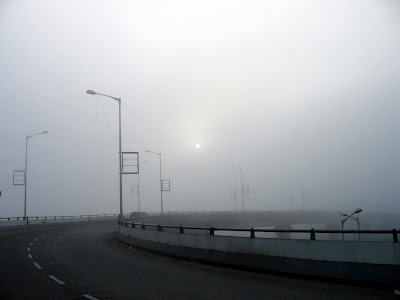
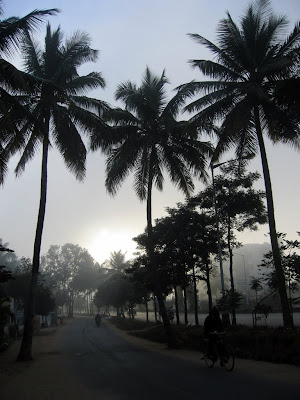
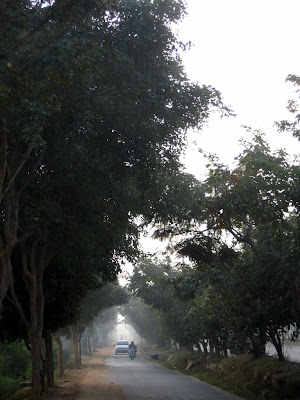
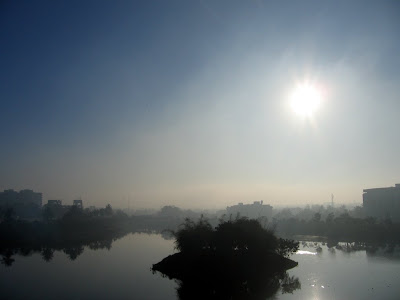
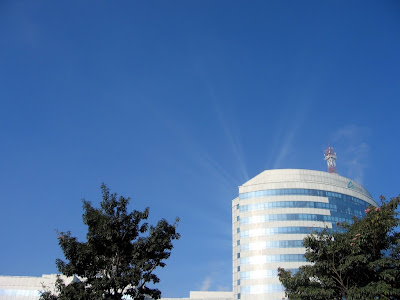
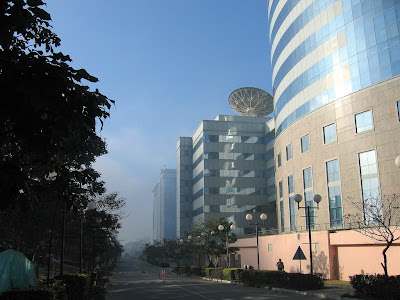
Another cold foggy morning in Bangalore and few more pictures. Photos taken near Hebbal kere (flyover), Outer ring road between KR Puram and Hebbal and at ITPB.


Hebbal Flyover


Service Lane (Outer Ring road)


Service Lane (Outer Ring road)


Lake between Benganahalli and KR Puram


ITPB


ITPB

Thursday, January 17, 2008

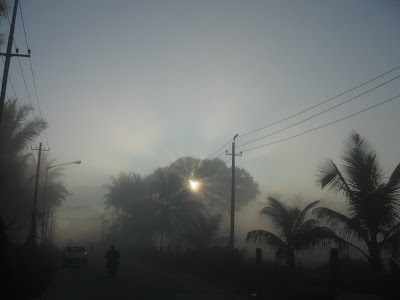
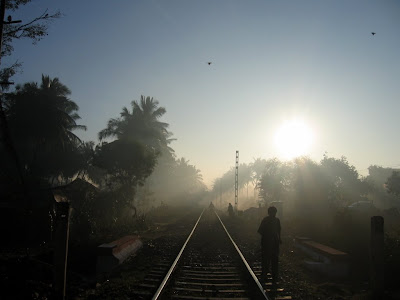
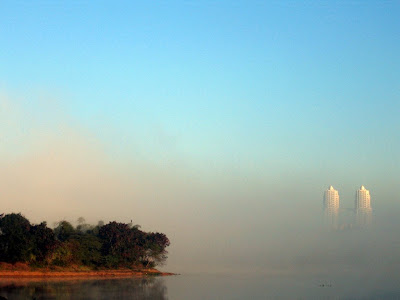
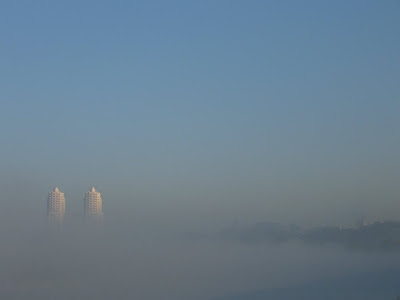
Sunrise - Bangalore

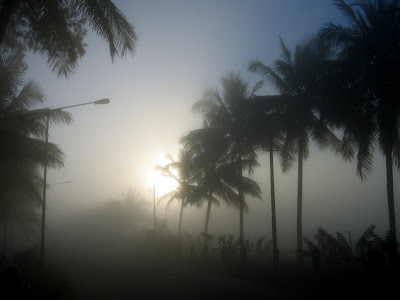
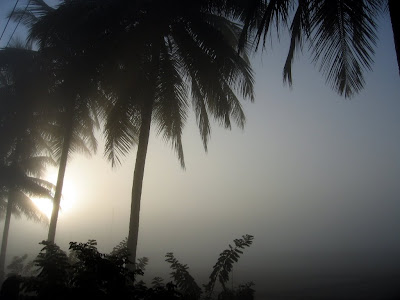
Took these photos today morning on my way to Hebbal. The twin towers picture (6th pictures) though a bit noisy is probably the best picture i have captured.


Agriculture University Campus (UAS)


Agriculture University Campus (UAS)


Agriculture University Campus (UAS)


Railway Line Near Hebbal


Hebbal Lake, Twin tower in the background


Twin towers

Sunday, November 18, 2007

Krishi Mela - 2007


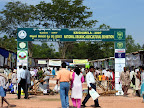
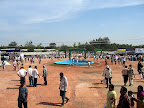
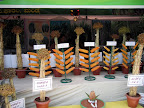
Krishi Mela, is an annual farmer fest organized at the sprawling 1400 acer GKVK campus on Bellary road. It is organized by GKVK itself. They showcase all the latest developments in agriculture field in this 4 day mela. Buses to his mela is arranged by the government from all over the state.


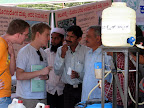
The students and faculty of GKVK did an excellent job explaining the new technologies to all the visitors. Expecting this fair to be like most dull government events, i was in for a pleasant surprise. The students at the stall were very warm and outreaching to everyone. I was happy to see them explain everything to the farmers with same intensity with which they talked to well dressed city people.

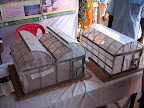
There were also private companies exhibiting their latest agriculture products - machinery, seeds, pesticides, etc. This years mela had special focus to organic farming. Looking at the numbers farmers who attended the mela, it was big success. They are expecting close to 200 thousand people to visit this year.


There are (i think) 7 agriculture colleges spread through out the state. Very few young people have the knowledge of these colleges or about the graduate programs they offer. With the advent of organized retailing (read contract farming) in this country, career opportunities are bound to grow for graduates of these colleges.


For a country like India to prosper, the real growth should come from the agriculture sector. Depending on the monsoons, the growth in this sector has been a dismal 2-4% (sometimes even -ve growth). The 9% growth in GDP that we have now is mainly because of the services sector (the contribution from the manufacturing sector is also not significant). No doubt that this is doing wonders, but this affects less than 15% of the population. For India to really grow,

the growth should come from sectors like agriculture (and manufacturing) on which more than 50% of our population depends. For this government should spend more on agriculture research rather than giving out power and fertilizer subsidies.

One aspect i hope the organizers realize, is that they should localize such melas. Instead of having a mela for the full state at Bangalore, they should organize them in different regions. By doing so they can also concentrate on the crops and techniques that are suite for that particular region. Like for example South-East Karnataka (Bangalore, Kolar, Chikballapur, Tumkur) is predominantly dry region, will less than adequate rainfall. Telling them how to grow rise is certainly of know use to them. Providing people with what they need specifically, will help the achieve better results.


You can find more pictures here.

Sunday, November 11, 2007

Random Pictures

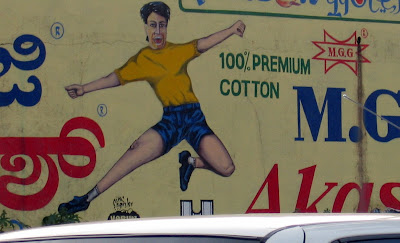
An ad somewhere along the ring road :) I guess he was jumping over crocodile infested tank :P